Project Overview
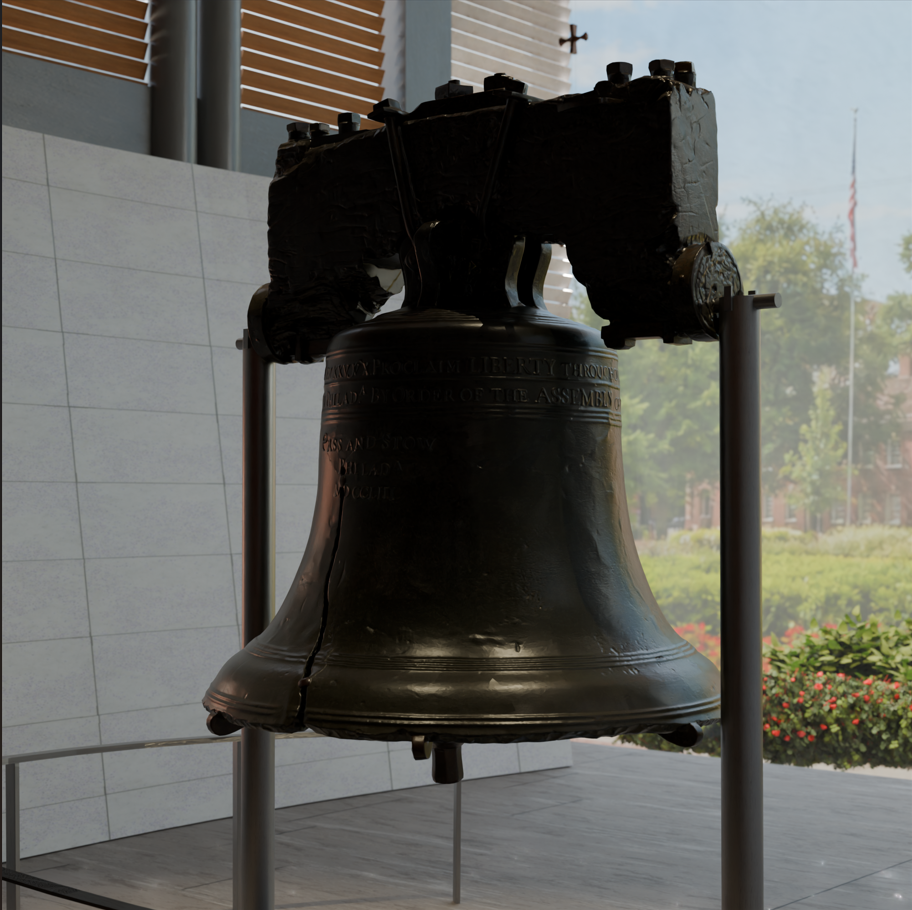
The Liberty Bell Digital Twin Project began after VAR Lab scanned a Liberty Bell replica at Penn State Behrend in December 2025. After that scan, the team looked for a free, high-resolution public model of the actual Liberty Bell and found that one did not exist.
VAR Lab set out to fill that gap by creating a public digital twin that teachers, students, researchers, designers, accessibility communities, and the general public can use at no cost.
Timeline
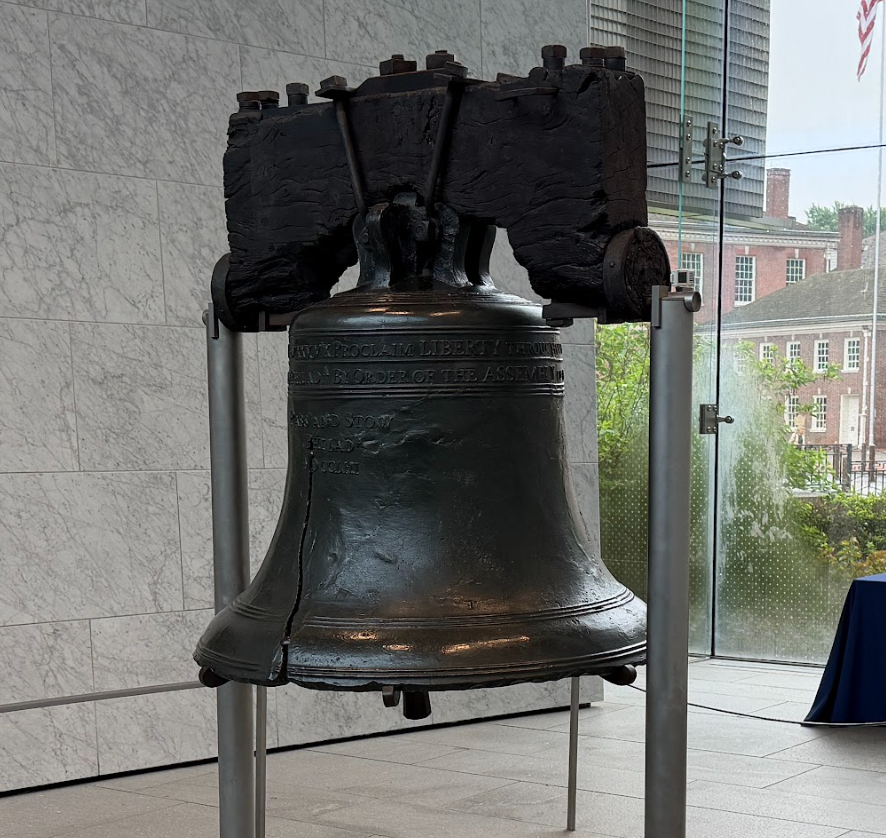
VAR Lab traveled to the Liberty Bell Center in Philadelphia from May 25 to May 27, 2026, to capture the Bell and its surrounding exhibit environment. Because the Liberty Bell is housed inside an active public museum, the team worked within limited before-hours and after-hours access windows to complete scanning, spatial capture, photography, and immersive media production without disrupting visitor operations. Following the fieldwork, the project continued through several weeks of post-processing and content creation, including scan review, 3D model cleanup, media editing, photogrammetry processing, immersive video preparation, and the development of digital assets for public education, preservation, and future exhibit use.
3D Tours
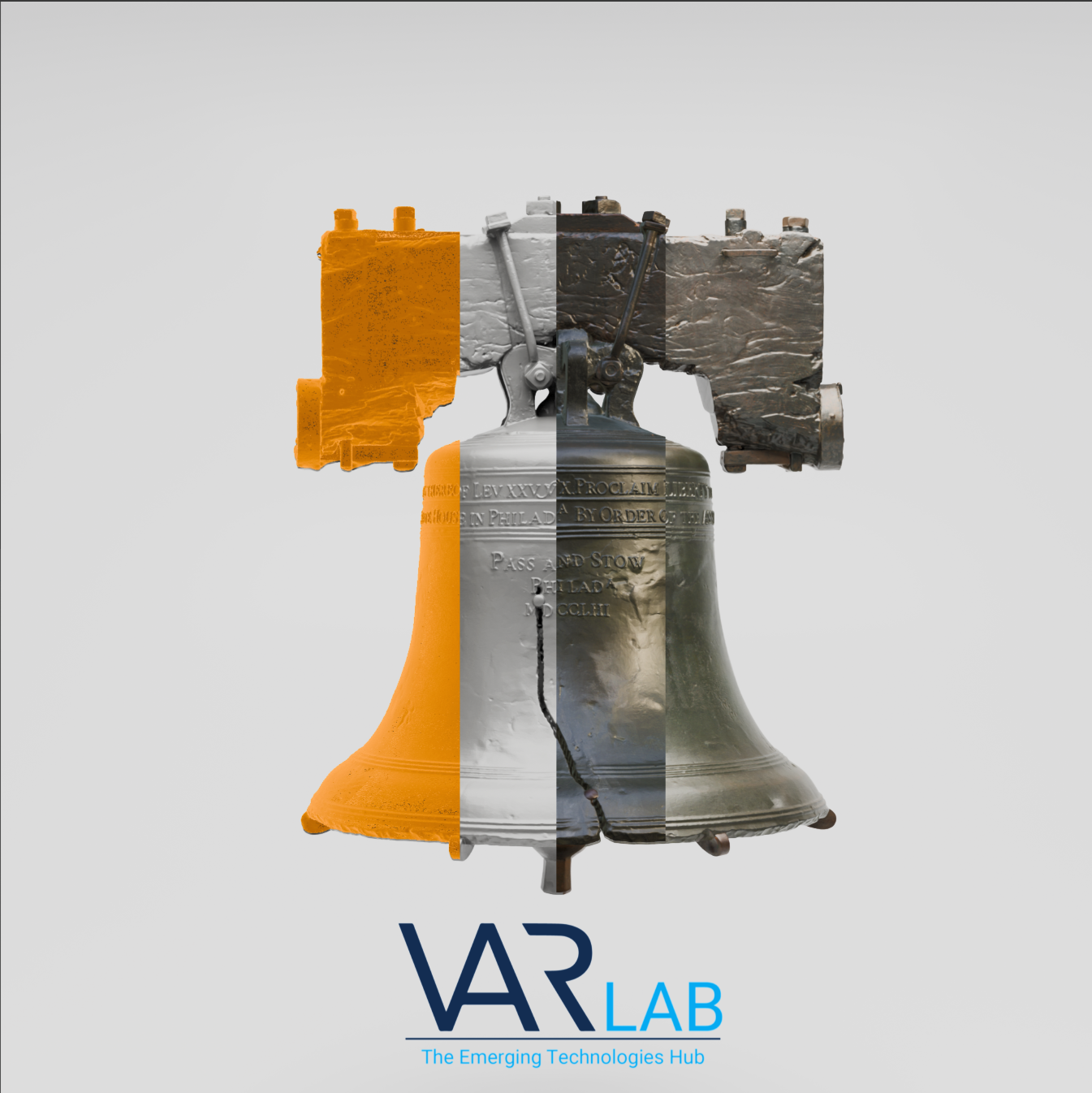
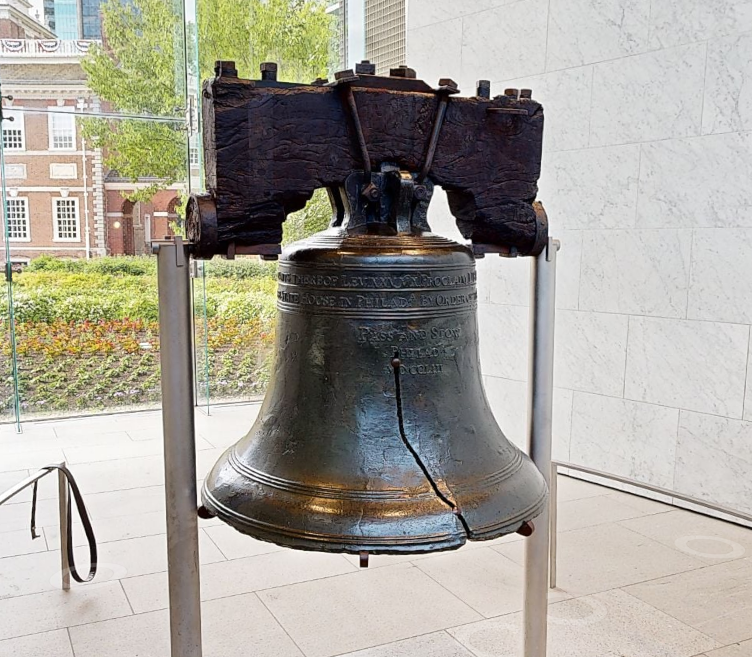
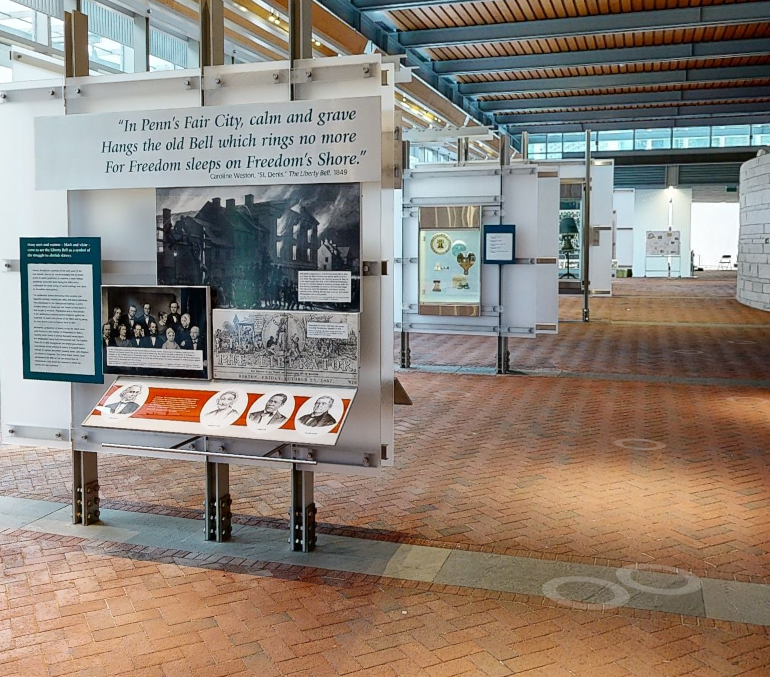
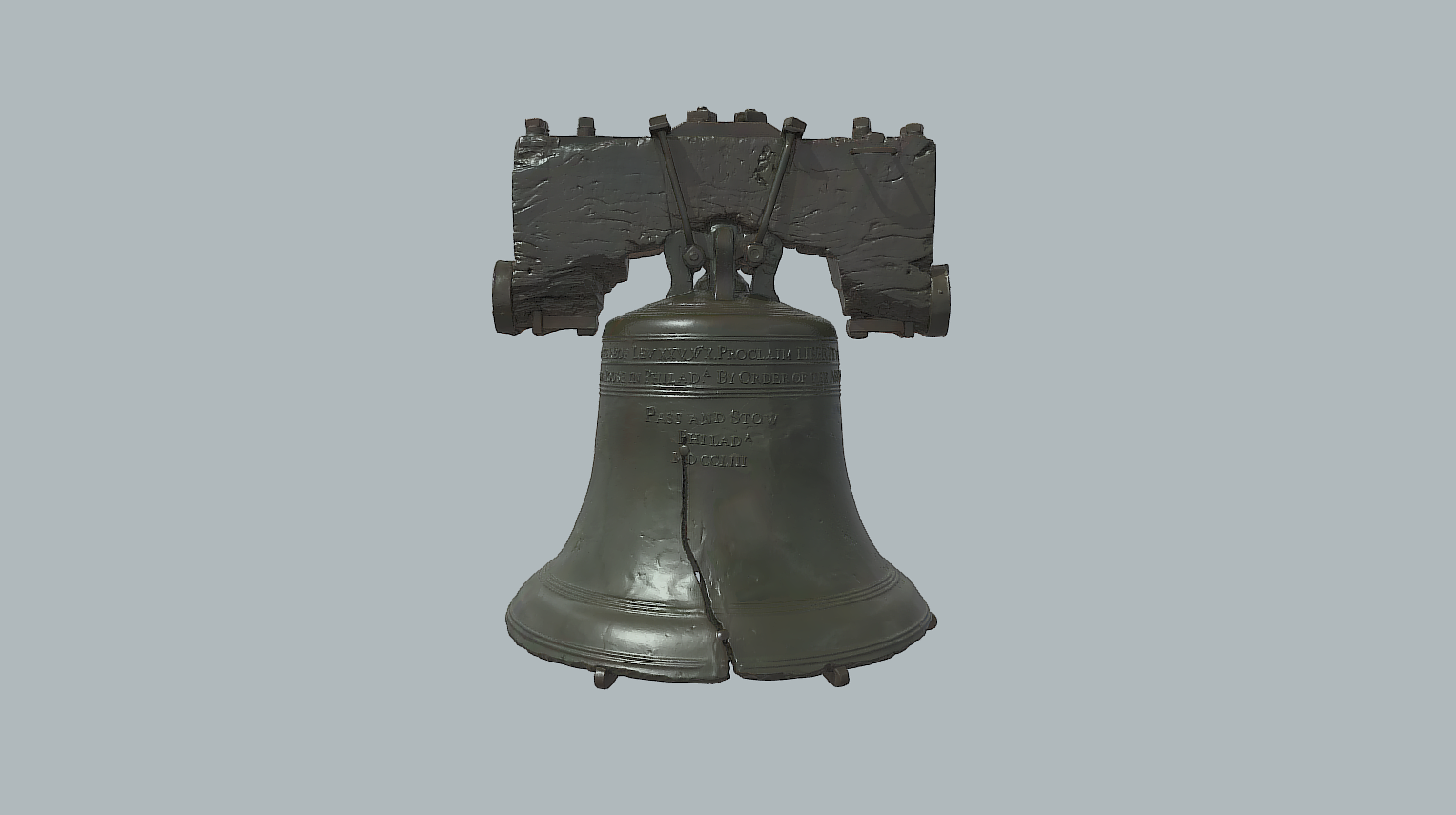
Take a closer look at the Liberty Bell with an interactive 3D tour. Explore the bell from multiple angles and view its surface details, shape, and historic features up close or explore the full Liberty Bell Center through an interactive virtual tour. Move through the space, view the surrounding exhibits, and experience the site beyond the bell itself.
3D Model

How We Captured It
Precision Scanning
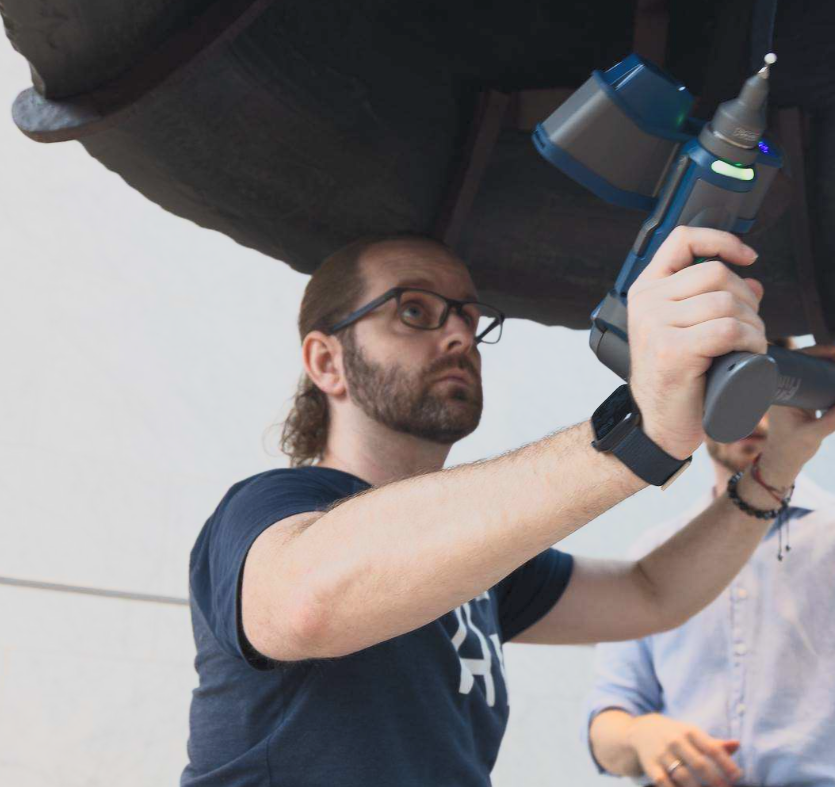
FARO Quantum X FaroArm with FARO Blu xS and FARO Blu xR laser-line probesFARO Quantum X FaroArm with FARO Blu xS and FARO Blu xR laser-line probes
The FARO Quantum X FaroArm with FARO Blu xS and FARO Blu xR laser-line probes supports high-precision surface capture and dimensional documentation. This system is especially useful for recording fine details, complex contours, and areas where accuracy is critical for preservation, research, and future reproduction workflows.
Digital Heritage Scanning
Artec Space Spider and Artec EvaArtec Space Spider and Artec Eva
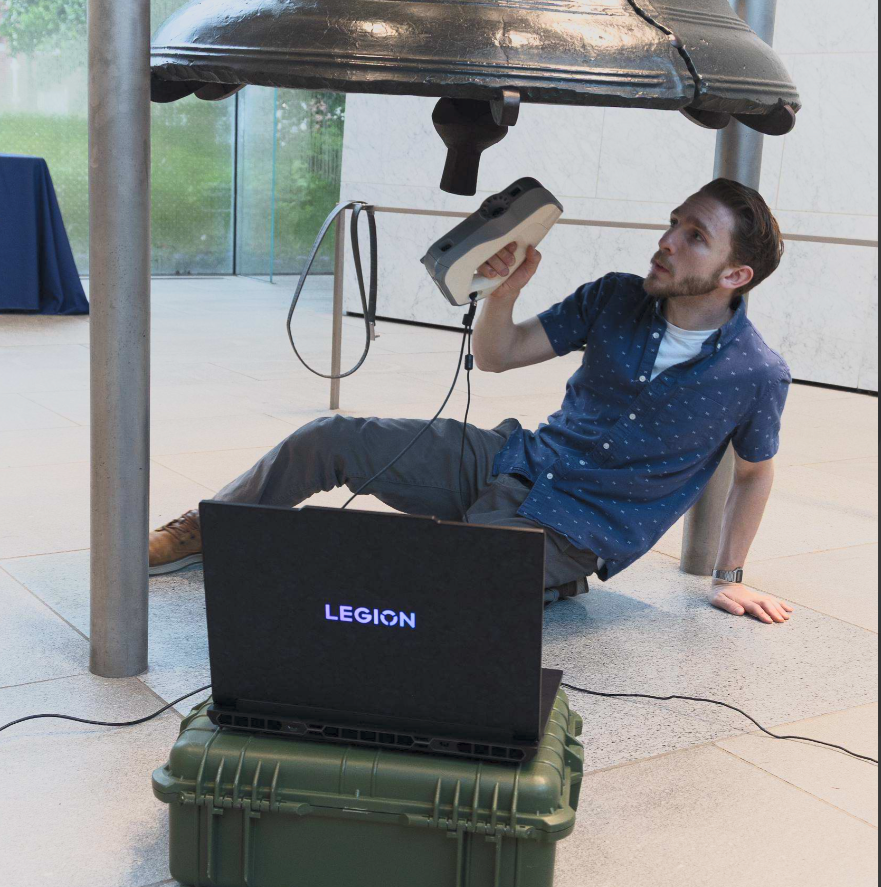
The Artec Space Spider and Artec Eva were used for structured-light scanning of the Liberty Bell and related project materials. These scanners help capture detailed geometry and surface information, supporting the creation of accurate 3D models for digital preservation, visualization, and educational access.Spatial Capture
Matterport Pro3Matterport Pro3
The Matterport Pro3 supports spatial capture of the Liberty Bell Center, helping document the full environment around the Bell. This allows viewers to explore the site virtually, understand the Bell’s physical context, and experience the surrounding exhibit space beyond the object itself.
Photo and Video
The Canon EOS R5 Mark IIThe Canon EOS R5 Mark II
The Canon EOS R5 Mark II is used for photography, video, and photogrammetry throughout the Liberty Bell project. High-resolution image capture supports documentation, media production, and image-based 3D reconstruction, helping preserve both the object and the surrounding site in visual detail.
Immersive Video
QooCam, Insta360 Pro 2, and Insta360 X5QooCam, Insta360 Pro 2, and Insta360 X5
QooCam, Insta360 Pro 2, and Insta360 X5 cameras were used to create immersive video for the Liberty Bell project. These systems support 360, VR180, and 3D/360 capture, allowing audiences to experience the Bell and its environment through virtual reality and other immersive formats.Processing
Lenovo Legion SystemsLenovo Legion Systems
Lenovo Legion systems were used for scan review, processing, and production work for the Liberty Bell project. These systems support demanding workflows such as reviewing scan data, processing 3D models, editing immersive video, and preparing final assets for digital access, preservation, and public presentation.Partners on this Project
We are grateful to all of our partners (Lenovo, Faro, Creaform, PolyWorks, Matterport, National Park Service, City of Philadelphia, and Senator Dan Laughlin) who helped make this project possible. Their support, collaboration, and trust allowed us to document the Liberty Bell through reality capture technologies and share it with a wider audience. Projects like this depend on strong partnerships between cultural institutions, educators, researchers, and technology specialists, and we sincerely appreciate everyone who contributed their time, expertise, and resources to this work.




News & Media


Image Gallery


Coming Soon
More Liberty Bell project releases are coming soon from VAR Lab at Penn State Behrend. Future outputs are planned to include immersive VR180, 3D/360, and 360 video experiences that bring viewers into the Liberty Bell Center and the archival scanning process. These releases will expand access to the project across VR headsets, web platforms, and standard screen-based devices.
VAR Lab is also planning future work that extends beyond digital viewing, including a full-scale 3D-printed replica of the Liberty Bell and possible sound integration. These next steps are intended to support education, accessibility, outreach, and exhibit experiences by allowing audiences to engage with the Bell’s scale, form, and sound legacy in new ways.
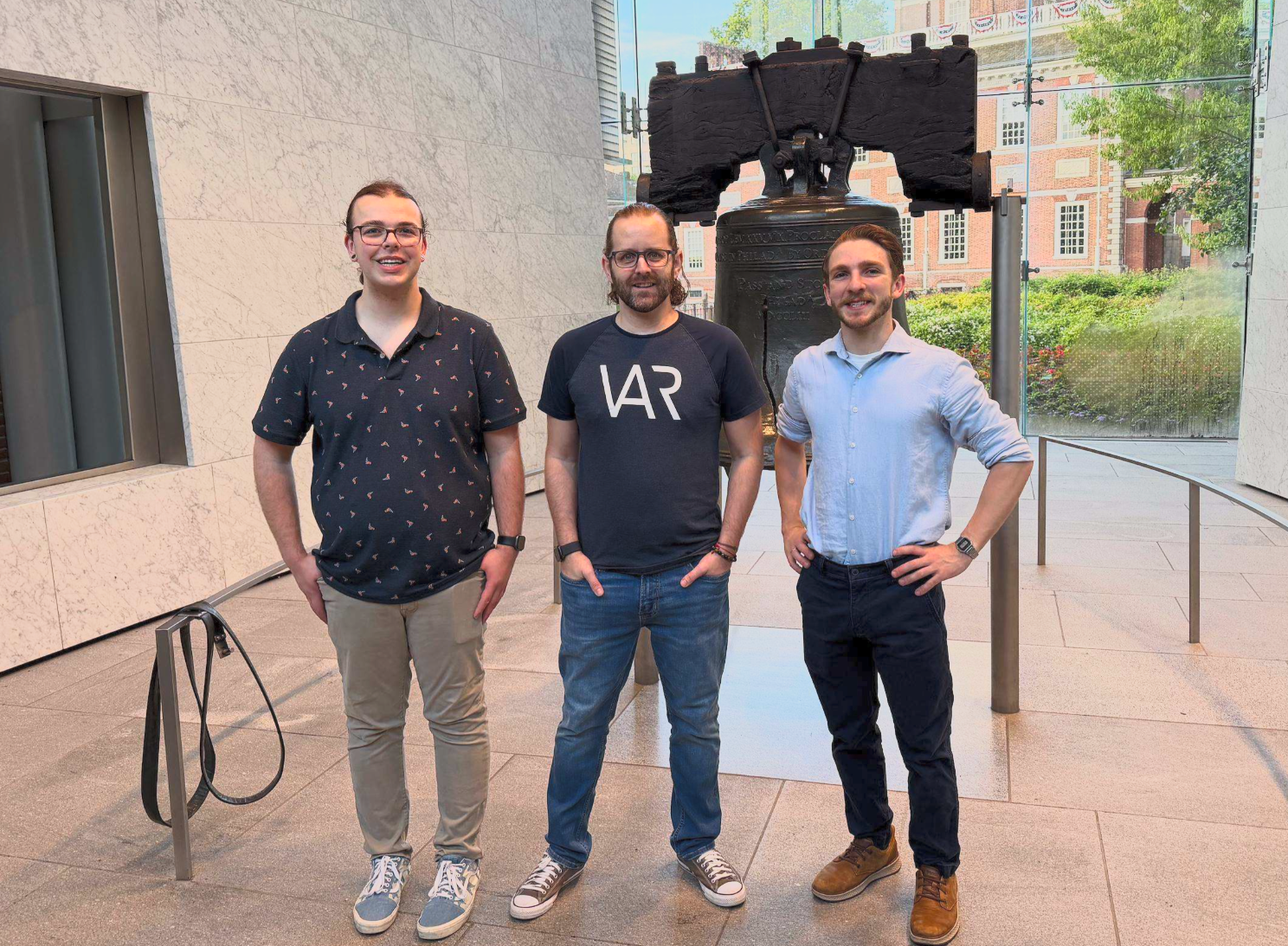
The Liberty Bell Team